An interstellar comet first spotted passing through our solar system in July is beginning its departure from our corner of the universe — but first it will fly by Earth, and scientists are capturing stunning new images during its approach.
Known as 3I/ATLAS, the comet will make its closest pass by us on Friday, coming within about 167 million miles (270 million kilometers) of our planet, but on the other side of the sun. For reference, the sun’s distance from Earth is about 93 million miles (150 million kilometers).
Comet 3I/ATLAS won’t be visible to the naked eye and the optimal viewing window, which opened in November, has passed. Those hoping to glimpse it will need an 8-inch (20-centimeter) telescope or larger, according to EarthSky.
The Virtual Telescope Project will share a livestream of the comet at 4:00 a.m. UTC on Friday, or 11 p.m. ET Thursday. In the event of cloudy weather, the webcast will be delayed 24 hours, said Gianluca Masi, astronomer and astrophysicist at the Bellatrix Astronomical Observatory in Italy and founder and scientific director of the Virtual Telescope Project.
The comet is expected to remain visible to telescopes and space missions for a few more months before exiting our solar system, according to NASA.
Astronomers have closely tracked the comet since its initial discovery over the summer in the hopes of uncovering details about its origin outside of our solar system as well as its composition. Multiple missions have observed the object in optical, infrared and radio wavelengths of light — and recently, scientists captured their first glimpses in X-rays to and discovered new details.
X-raying an interstellar visitor
Comets that originate in our solar system emit X-rays, but astronomers have long wondered whether interstellar comets behave the same.
Although previous attempts to find out were made as two other interstellar comets passed through our solar system in 2017 and 2019, no X-rays were detected.
But that all changed with 3I/ATLAS.
Japan’s X-Ray Imaging and Spectroscopy Mission, or XRISM, observed 3I/ATLAS for 17 hours in late November with its Xtend telescope. The instrument captured X-rays fanning out to a distance of 248,000 miles (400,000 kilometers) from the comet’s solid core, or nucleus, which could be a result of clouds of gas around the object, according to the Japan Aerospace Exploration Agency. But more observations are needed to confirm the finding.

X-rays can originate from interactions between gases given off by the comet — such as water vapor, carbon monoxide or carbon dioxide — and the continuous stream of charged particles releasing from the sun called solar wind. Comets, which are a combination of ice, rock, dust and gas, heat up as they approach stars like the sun, causing them to sublimate materials. XRISM detected signatures of carbon, oxygen and nitrogen near the comet’s nucleus.
The European Space Agency’s X-ray space observatory XMM-Newton also observed the interstellar comet on December 3 for about 20 hours using its most sensitive camera. A dramatic image released by the agency shows the red X-ray glow of the comet.
The X-ray observations, combined with others across various wavelengths of light, could reveal what the comet is made of — and just how similar or different the object is from those in our own solar system.
Sign up for CNN’s Wonder Theory science newsletter. Explore the universe with news on fascinating discoveries, scientific advancements and more.
For more CNN news and newsletters create an account at CNN.com
latest_posts
- 1
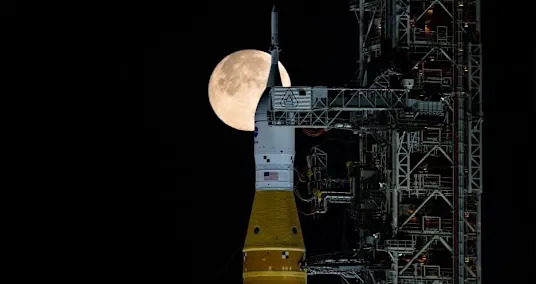
 Everything to know about NASA's moon mission launching this week
 - 2Untamed life Safe-havens All over the Planet Offering Remarkable Creature Experiences
- 3A Past filled with Old Civilizations: The World's Most established Societies
- 4The Most Rousing Ladies Business visionaries of Today
- 5Figure out How to Clean and Really focus on Your Lab Jewel




- Wolf Bites Woman in Shocking Attack at Busy Shopping Center
- Outside Lovers' Decision: Favored Climbing Rucksacks
- What to know about the hepatitis B shot — and why Trump officials are targeting it
- Check out the exclusive pitch deck Valerie Health used to raise $30 million from Redpoint Ventures to automate healthcare faxes
- Bolsonaro discharged from hospital and placed under house arrest
- Germany to create restitution council to return colonia-era acquired cultural artefacts
- Anti-war protests held across Israel under wartime gathering limits
- The Ursid meteor shower will be the last of the year, peaking just before Christmas: What to know and how to watch
- IDF: Staying in West Bank refugee camps will quell lone-wolf terror